

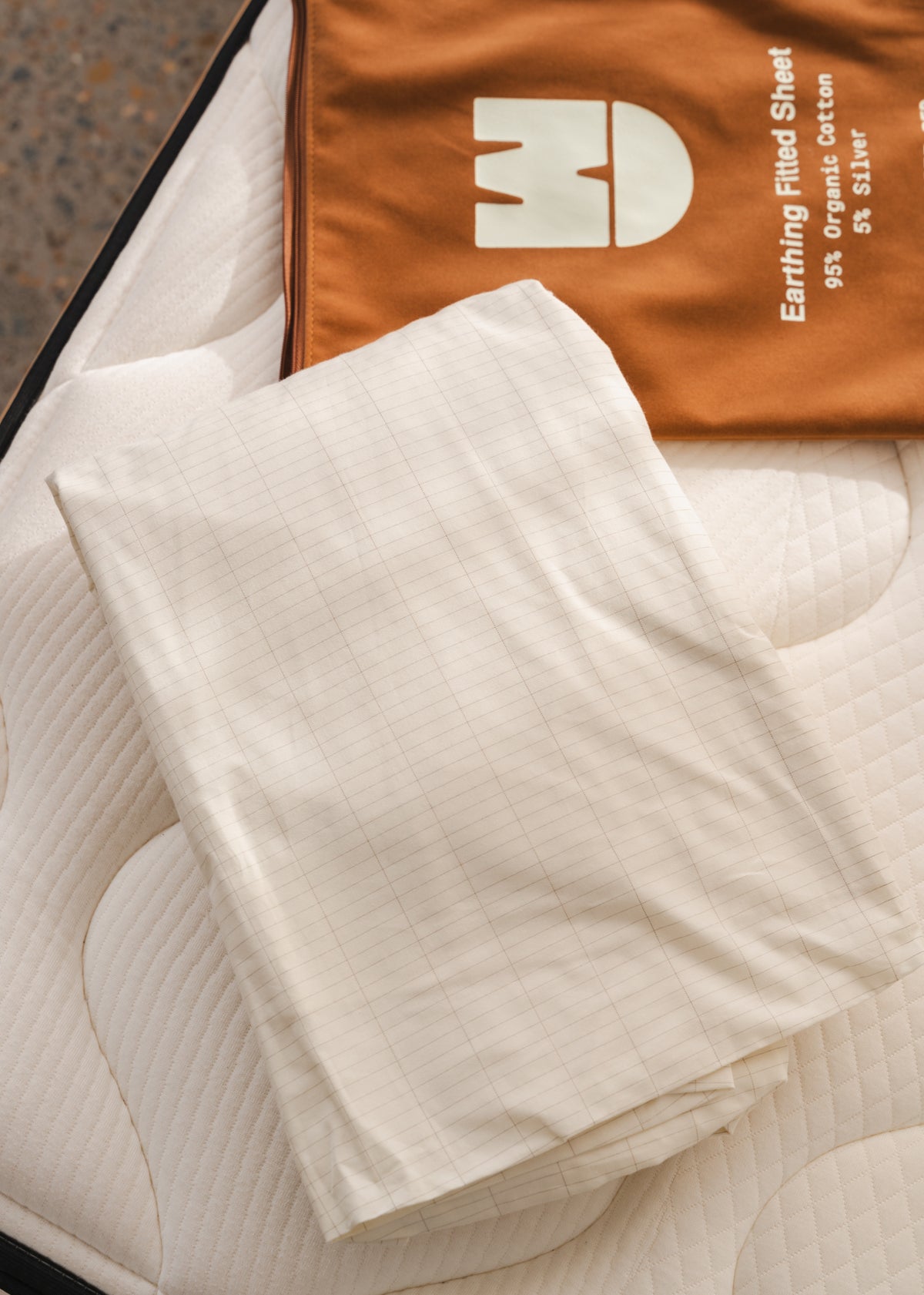
Grounding, or earthing, is one of those practices that sounds a little out there until you look at the actual proposed mechanism, and then sounds genuinely plausible, right up until you look at how thin the research base still is. I'd rather give you the honest version than the marketing version, so here's both the case for it and the real caveats.
What Grounding Actually Is
The practice itself is simple: direct skin contact with the earth's surface (walking barefoot on grass, sand, or soil), or using a conductive mat, sheet, or pillowcase connected to the earth via a grounding wire, typically through a wall socket's earth pin. The theory is that the earth carries a mild negative electrical charge, and that contact with it may help neutralise excess positive charge (free radicals) in the body, with proposed downstream effects on inflammation and sleep.
That mechanism is biologically plausible on paper. It is not the same thing as being proven to work as claimed, and it's important to hold both of those at once rather than picking one.
What the Actual Studies Found
A small randomised, double-blind pilot study looked at one hour of grounding contact and found measurable improvements in blood flow and reductions in certain inflammatory blood markers compared to a sham (ungrounded) control, published in the Journal of Inflammation Research.
A separate study measured nighttime cortisol levels in people sleeping on grounding sheets versus ungrounded sheets, and found that grounded participants had lower, more normally patterned cortisol levels along with self-reported improvements in sleep, pain, and stress, published in the Journal of Alternative and Complementary Medicine (Ghaly & Teplitz, 2004).
Other small trials have reported improved heart rate variability and reduced blood viscosity during grounding sessions.
Why to Hold This Evidence Loosely
Being straightforward about the limitations matters here, arguably more than for most things we write about. Most grounding studies involve fewer than 100 participants, several of the foundational studies were conducted or co-authored by researchers connected to earthing product companies, which is a real conflict of interest worth knowing about, and independent, large-scale replication is still lacking. None of the studies fully rule out that better sleep, lying still for an hour, or simple relaxation and attention effects could explain some of the reported benefits rather than grounding itself.
So: the studies that exist are genuinely interesting and mostly point the same direction, but this is early-stage evidence, not settled science, and anyone telling you otherwise (in either direction) is overstating their certainty.
Where That Leaves It, Practically
Grounding is low-risk. It's not going to interact with medication or cause harm, and even if some of the effect is relaxation rather than the specific mechanism being claimed, better sleep and lower perceived stress are genuinely worthwhile outcomes on their own. It's reasonable to think of it as a low-cost addition to a sleep routine you're already trying to improve, not a replacement for medical treatment of a real inflammatory or sleep condition, and not something to expect dramatic results from.
If you're curious, our Earthing Fitted Sheet and Earthing Pillowcase are built for exactly this, contact through the night rather than a deliberate daily practice, and the Earthing Mat suits sitting at a desk or on the couch. You can see the full range in our Grounding collection.

Leave a comment
This site is protected by hCaptcha and the hCaptcha Privacy Policy and Terms of Service apply.